How to Increase Employee Participation Without Sending More Reminders
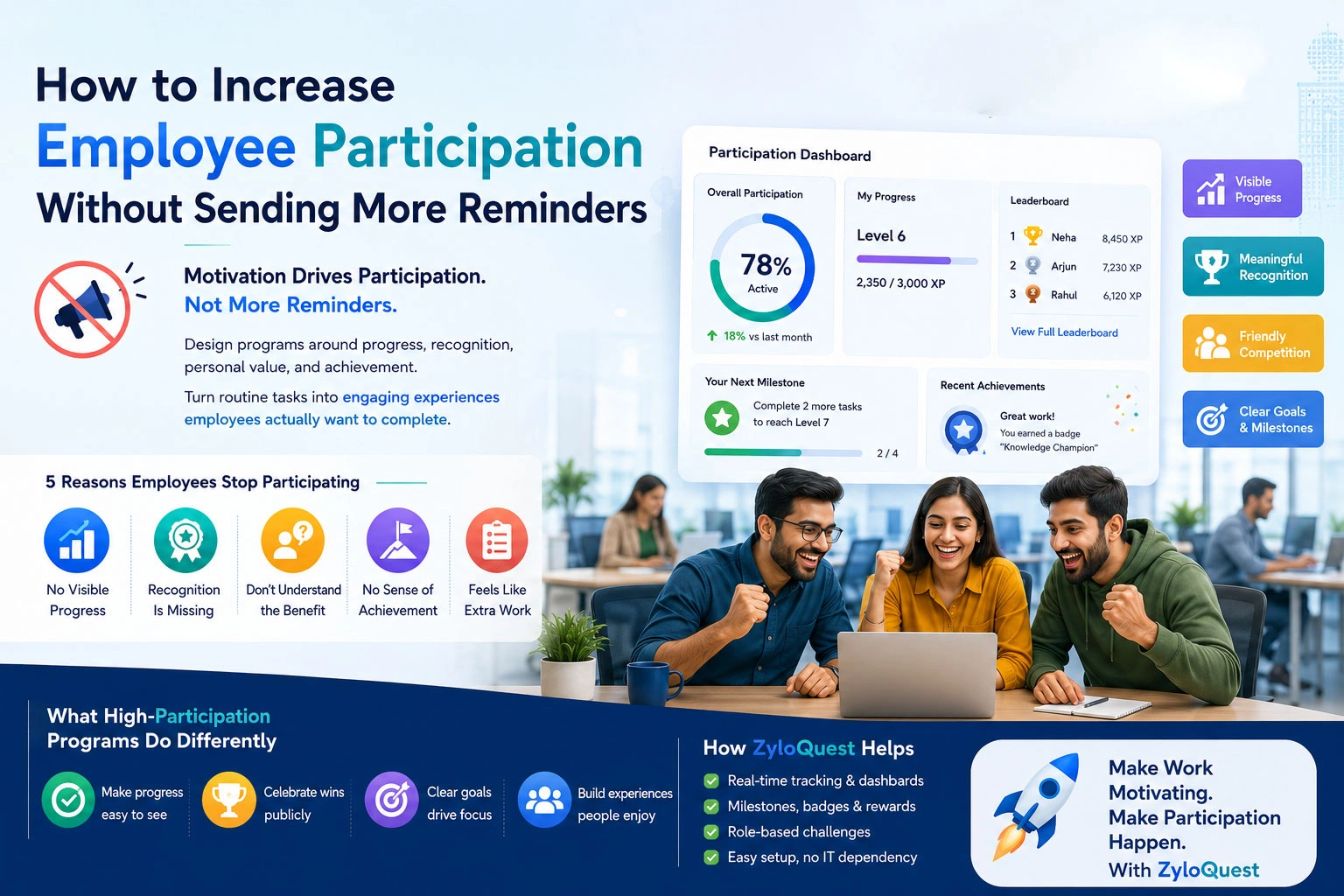
Employee participation does not improve with endless reminders. It improves when people feel progress, recognition, personal value, and achievement. If tasks feel like extra work, interest drops fast. The smarter move is to design programs around motivation using milestones, visible wins, friendly competition, and real-time tracking. ZyloQuest helps turn routine workplace tasks into engaging experiences employees actually want to complete.
Usually, companies struggle not with communication, but motivation. If people keep missing training or skipping internal tasks, managers crank out more reminders. Sure, these notifications make the deadlines obvious, but they don’t spark any actual interest in completing the work. If your team only stays engaged because you’re constantly nudging them, you’ve got a bigger issue, and sending more Slack messages just isn’t going to solve it.
You see the same cycle all over the place. A project launches with excitement, participation trickles down a few weeks later, and leaders scramble to send more follow-ups, or mention the project in every meeting. This usually causes a quick jump in activity, then participation slides again. It’s tempting to blame busy schedules or forgetfulness, but honestly, it’s simpler.
People stick with activities that feel rewarding, visible, or meaningful. Everything else gets shoved aside. Another email can fix “I didn’t know about this,” but won’t solve “I just don’t care.” Most employees already know what’s required, so lack of awareness isn’t what’s holding them back.
Someone can remember every detail about their favorite hobby but forget all about a workplace program. That happens because one feels like a choice, the other feels like an obligation. If your program relies on managers chasing people, participation drops the moment those reminders stop. That’s just not sustainable.
Reminders help with awareness, but they don’t give anyone a reason to act. People know their compliance modules are waiting; they know about the new initiative. Awareness isn’t the problem here. Extra reminders only add to the noise of an already busy workday.
Winning organizations use behavioral design to make work more inviting. Instead of begging people to join, they build systems people want to use. Progress is easy to spot, with levels and milestones. Wins get celebrated in public, so everyone sees the value. When goals are clear, folks spend less time figuring things out and more time actually working.
Good gamification isn’t about making things childish. It’s about tapping into what keeps people interested: tracking progress, friendly competition, visible wins. When you use those tools, employees stick around because they want to hit the next milestone, not because of another email. ZyloQuest makes this simple. Managers can see participation in real time, and everything is organized with clear milestones and rewards.
Before sending your next follow-up, ask yourself: would people still take part if you stopped asking? If the answer’s no, your issue is the experience, not the reminders. Put energy into making work more visible and rewarding. Recognize small wins, and set up the process around how people actually behave.
It’s pretty simple. Participation is about motivation. Sure, reminders spark a spike in activity for a day or two, but they don’t build long-term interest. Real engagement comes when people can see their progress and feel like their effort matters. Focus on why folks want to participate, and you won’t have to chase them down so much.
Knowing about a task doesn’t guarantee action. People want things that feel rewarding or show progress. If all a task offers is obligation with no real achievement, it’ll get ignored in favor of something more interesting.
Constant notifications fix awareness, not interest. If employees already know what to do, more emails just feel like noise or pressure, which makes the work feel even more like a chore.
Humans love seeing their own progress. With clear milestones or progress bars, tasks stop feeling endless. That sense of momentum keeps people focused right through to the finish line.
Organizational goals are what the company needs; like completed compliance training. Employee value is what someone gets personally, like learning or recognition. People pitch in more when they see what’s in it for them.
Not really. Good gamification’s about feedback, recognition, and clear challenges. It makes routine work feel rewarding. The point is to build experiences people choose because they genuinely enjoy the sense of achievement.