What Happens When You Turn Work Into a Game
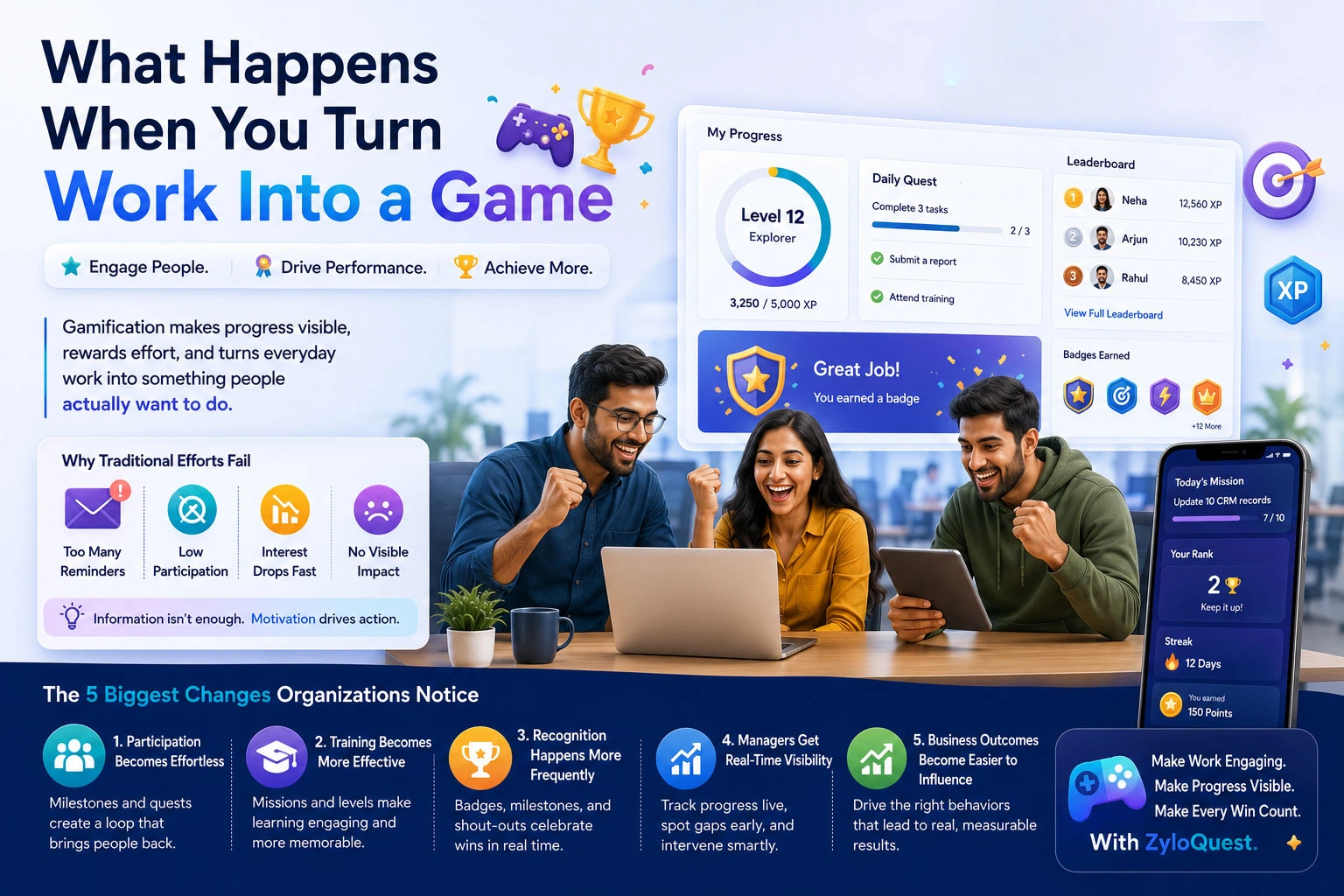
Most employee engagement efforts fail because they ask people to participate without giving them a reason to stay involved. Training loses momentum, recognition becomes inconsistent, and productivity campaigns fade quickly. Gamification changes this by making progress visible, rewarding effort, and encouraging voluntary participation. When done right, it helps employees stay motivated, gives managers real-time visibility, and connects daily actions to stronger business outcomes.
Most companies kick off new projects, be it a sales push, compliance drive, or onboarding, hoping for the best. At first, things look good. People complete tasks, managers feel hopeful, and everyone pats themselves on the back. But it never lasts. Interest drops off, modules get skipped, and the company platform goes silent. Before long, the whole program is just a bunch of numbers on a manager's report, not something making a real difference.
Honestly, this story plays out everywhere. People lose interest right after the launch, and teams feel like they’re flying blind. Managers are stuck either micromanaging or just hoping for the best. Participation turns into something people only do when they absolutely have to.
A lot of workplace programs focus on just handing out info, assuming that if people know why something matters, they’ll do it. That’s just not how people work. Real motivation comes from seeing progress and getting recognition or rewards, stuff that actually feels good. Those triggers drive action far more than another long explainer video.
Look, people will waste hours trying to win a game but struggle to get through a five-minute training video. It’s because games show progress, spark a little competition, and let you win. When work skips that, tasks turn into mindless chores, not anything exciting.
Bring game mechanics into work, and you’ll notice people act differently. Tasks shift from annoying routines to challenges worth taking on. Hitting an achievement actually means something.
People start showing up because they want to, not because they have to. Instead of trying to force more checkboxes, companies create a space where people are excited to take part. Activities stop feeling like busywork and start looking like real opportunities to hit goals and outdo themselves.
This isn't just about points and badges. It's about dialing into what really motivates people: progress, rewards, and a little recognition. These are things that drive behavior no matter what. Games just pull it together really well, and when you use the same ideas at work, people end up participating because they want to, not because they’re told to.
Too often, folks hear “gamification” and only think of leaderboards. But a leaderboard on its own can backfire, especially if the competition gets lopsided. What actually works is setting meaningful goals, making progress visible, and letting teams work together to hit milestones. The point isn’t to turn everyone into a gamer, it’s to make work feel a little more rewarding.
Traditional engagement tricks, endless emails, constant notifications, are getting less effective because people tune them out. Companies need new ways to capture attention and reinforce the right habits. Gamification works because it matches how people naturally behave. The organizations that figure this out will be the ones with teams who want to come back for more.
When work starts to feel more like a game, participation skyrockets, and you can actually measure progress. Platforms like ZyloQuest turn routine jobs into challenges people want to tackle. Managers get instant visibility, and employees find fresh motivation in daily work. Instead of begging people to pay attention, companies finally create experiences the team wants to be part of. That’s a whole different kind of win.
It means using things like milestones, quests, rewards, badges, and visible progress to make everyday work feel more engaging. The goal isn’t to turn work into a video game. It’s to make tasks feel clearer, more motivating, and a lot less like busywork.
Because most of them depend on reminders, emails, and managers pushing people along. That might work for a short while, but it rarely sticks. People stay involved when they can see progress, feel recognized, and have a reason to come back.
Yes, especially when training is broken into smaller missions, levels, or challenges. People are more likely to finish when learning feels like progress instead of another long task they have to sit through.
No, and that’s where many companies get it wrong. Leaderboards can help sometimes, but they are not the whole story. Real gamification is about meaningful goals, visible progress, recognition, and rewards that actually connect to the work.
ZyloQuest helps turn routine work into challenges people actually want to complete. It gives teams milestones, recognition, and real-time progress tracking, so employees stay motivated and managers can see what’s happening without constantly chasing everyone.