Why Employee Productivity Drops (And What Actually Fixes It)
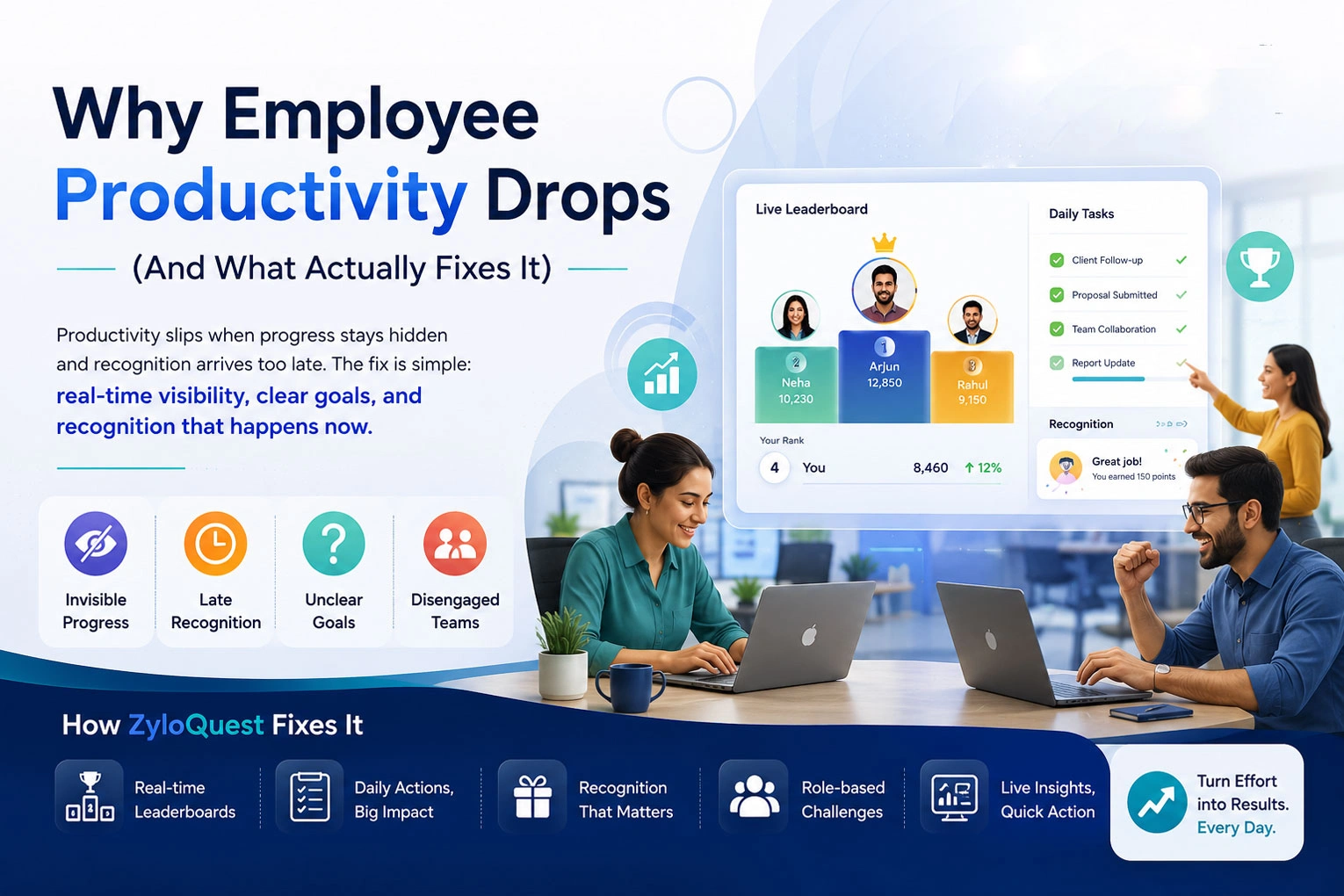
Productivity slips when work starts feeling like a checklist and effort is ignored. It is rarely about laziness; it happens because progress stays hidden and yearly reviews arrive too late to matter. To fix this, teams need to see their wins as they happen. Using a platform like ZyloQuest helps by breaking down big goals into daily tasks with live rankings. This makes sure everyone knows where they stand right now, replacing guesswork with clear, immediate feedback that keeps people from losing interest.
People rarely just stop caring about their work for no reason. Most people start a new job feeling ready to do something great, but the atmosphere around them changes over time. The cues that once made working hard feel worth it often dry up without anyone realizing. Managers might get pulled into other tasks, or the company might grow so fast that feedback gets lost in the shuffle. It is usually a slow change based on something the organization missed rather than a change in the employee.
A lack of recognition is one of the biggest reasons people slow down. If hard work keeps going unnoticed, it is actually a logical choice for someone to stop trying as hard. People adapt to the signals they see, so if the message is that nobody is watching, energy levels drop to match that environment.
Another problem is invisible progress. When you cannot tell if your work connects to a larger goal, daily tasks start to feel like a boring checklist with no momentum. Unclear goals also cause teams to drift because nobody knows if their daily choices are actually helping the group move forward. If you only hear a "thank you" once a year at an annual review, that link between work and reward is too weak to matter much.
Low motivation is actually social and can spread through a group like a cold. People notice when a high performer stops trying and there are no consequences for it. This sends a loud signal that effort is not valued, leading others to wonder if they should bother trying hard themselves. This hidden issue costs companies a lot of money and makes people twice as likely to look for a different job. Managers who aren't looking for these signs often don't notice the problem until the team's output is already suffering.
Standard performance reviews often fail because they were designed to measure employees rather than keep them interested. Telling someone in December how they did back in March doesn't help them stay focused during the rest of the year. There are massive gaps between these check-ins where interest can easily drop, and these old systems don't offer much help during those times. If a yearly goal isn't tied to what someone does every day, the path to success feels blurry, and people eventually disconnect.
Real solutions require feedback that is fast, clear, and easy to see. Showing progress in real time changes the feeling of the work and turns distant goals into something that feels alive. When people know immediately that what they just did counts for something, they stay more focused on the task. Letting people see how they compare to the rest of the team also helps, as long as the comparison is fair. People naturally work harder when the standards are public and clear to everyone.
The ZyloQuest platform was built to address these specific issues through a better system design. It uses real-time leaderboards so teams know where they stand immediately, which changes the "we'll let you know later" feeling into "you're making it happen right now". Instead of overwhelming people with massive targets, it breaks them into small actions they can take every day.
The system rewards work that actually leads to results, ensuring recognition happens right when something is achieved rather than months later. It also allows managers to set up challenges by role, so a new employee isn't unfairly competing against an expert. This keeps the work relevant for everyone as teams grow. HR teams can change the rules without needing help from IT, and live dashboards show exactly when team interest is starting to slip so managers can act quickly.
When productivity falls, it is usually because the systems in place stopped giving people a reason to care. Problems like invisible progress and late recognition are about how a company is set up, not about a person's character. The companies that see the best results are the ones that make progress and recognition part of daily life. This does not happen by accident; it happens through intentional design.
Output usually drops because the basic signals of a healthy workplace go away. Effort goes unnoticed, goals become unclear, and feedback takes too long to reach the employee. This chips away at the desire to work hard long before it shows up in official reports.
These systems mostly look backward at what already happened instead of helping people move forward. By the time a review cycle happens, the best chance to fix a problem or reward a specific win has usually passed. Most motivation issues happen in the months between these official meetings.
When people can see their progress as it happens, a distant goal starts to feel interesting and alive. Real-time visibility is much more effective than getting a summary weeks or months later. It helps people feel like they are making a difference right now.
Yes, because the level of effort people put in is often tied to what they see around them. When a top performer stops trying and nobody says anything, it sends a signal to the rest of the team that working hard isn't a priority. This social effect can damage morale throughout the entire office.
The platform allows for segmentation, which means you can set up challenges based on a person's specific role or experience level. This prevents a new hire from having to compete with someone who has been there for years. By making the challenges relevant to each person's job, everyone stays more involved.