Gamification at Workplace vs Traditional Performance Tracking: What Works Better?
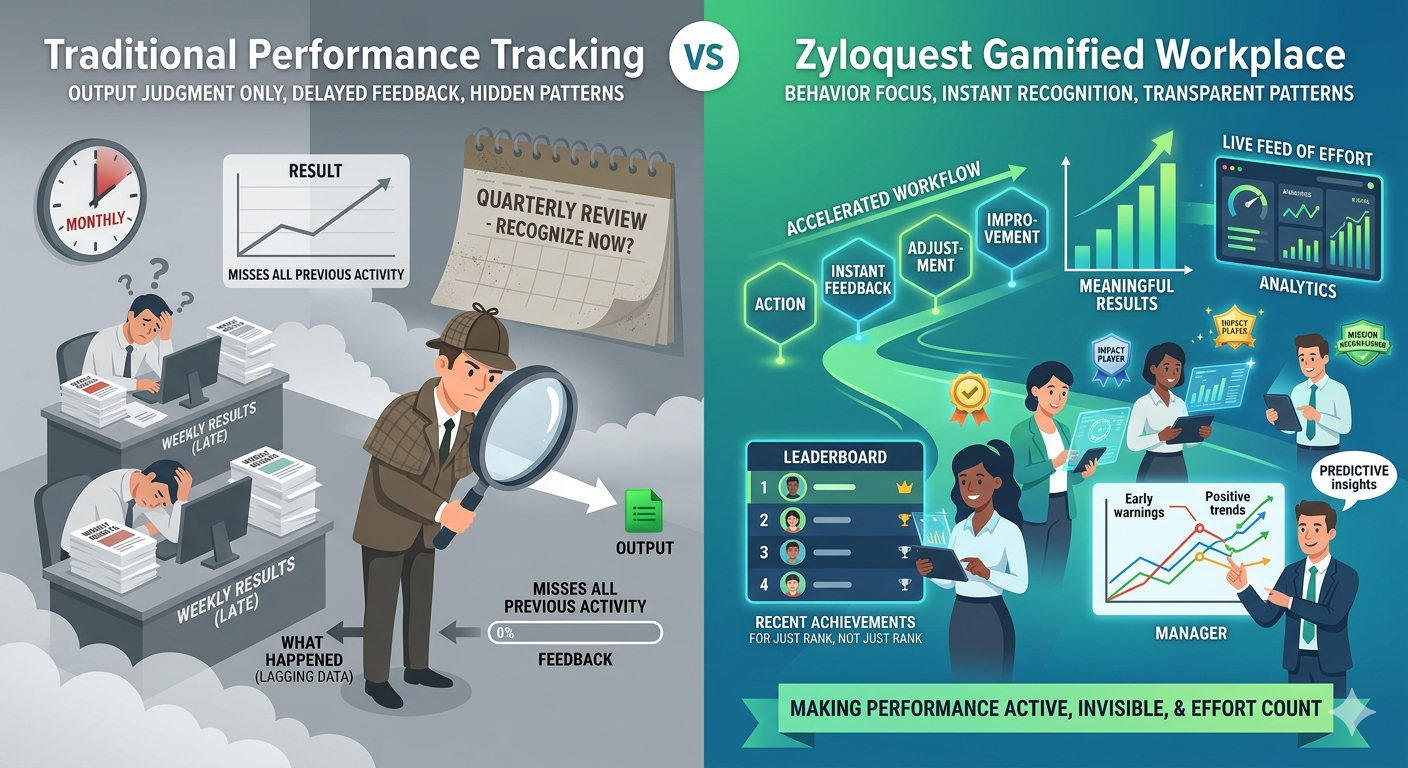
It's clear that performance tracking gets a serious upgrade when you bring gamification into the mix. Instead of just showing the end results, gamification captures the effort happening right now, as work unfolds. Traditional tracking? It only reports the outcome once everything is finished. Because of this, teams respond slower and often don't really get the full picture until it is too late.
Honestly, traditional tracking just drags. It collects data once the week, month, or quarter wraps up. By the time managers look it over, all the actions are old news. They can see what happened, but they can't do much about it after the fact. Employees? Same story. Feedback arrives late, or sometimes not at all.
When feedback takes too long, performance usually suffers. Problems build up unnoticed, and great work goes unrecognized until it is nearly forgotten.
Traditional systems judge by output alone. They log what got done, not how it was done. Two people might deliver the same result, but one is steady and reliable while the other struggled the whole time. It does not matter. They both look equal on paper.
That lack of detail means managers miss early warning signs and overlook patterns of improvement. Over time, these blind spots make performance tracking less reliable because decisions get made with half the facts.
Gamification jumps in right away, recording every task, milestone, and action as it happens. Instead of waiting for a report, managers spot trends in real time. Effort shows up through points, badges, or progress bars, so the whole process is transparent.
Employees benefit too. When you can see your progress instantly, you adjust your approach faster. Tracking turns active, not passive.
Engagement shoots up because feedback is immediate. No more waiting for a monthly review to find out how you are doing. Progress is front and center, and recognition happens on the spot.
People stay involved simply because the system responds to their effort right away.
Leaderboards sound fun, but they mostly highlight top performers while the rest of the team gets left out. The high scorers have reason to keep pushing, but everyone else figures they are too far behind to catch up. It does not take long for participation to drop.
This leaves you with a handful of people improving while the rest tune out. Gamification is more effective when it highlights individual progress, not just overall rankings.
Gamification reveals meaningful patterns, not just final results. Managers can spot drops in activity, steady improvement, or sudden changes in behavior, often before they become big problems.
Traditional tracking hides these trends and only shows the bottom line. Early signals mean quicker responses, which boosts both performance and decision making.
Not at all. Gamification makes performance tracking better, but you still need traditional methods for final outcomes like revenue, goals, and benchmarks.
What works is combining both. Gamification fills the gap by giving real time visibility, while traditional tracking keeps the focus on end results.
Focus on the behaviors that actually lead to good results, not just the rewards. Make sure the points and progress markers connect directly to those key actions.
Traditional tracking captures what already happened. Gamification platforms like ZyloQuest show what is happening now.
This shift transforms how teams operate. With real time visibility, decisions come faster. Engagement goes up because feedback is constant, and early warning signs fix performance gaps before they grow.
Simply put, gamification makes tracking an active process. Traditional systems keep it passive. Teams that use both get ahead, while those stuck with slow, old school tracking always play catch up.
Gamification brings points, tasks, and progress systems into the workplace to monitor and improve performance in real time. It focuses on daily actions, not just end results.
Gamification logs effort as it happens, while traditional systems tally outcomes once tasks are done. That means teams can act faster with gamified data.
Definitely. Progress stays visible and feedback is instant, keeping employees focused and consistent.
No. Leaderboards mostly motivate top performers. A good system needs to highlight personal progress too, so everyone stays engaged.
No, you still need reviews for final evaluations. Gamification boosts them by delivering continuous data throughout the work period.
Because traditional tracking delays feedback and misses crucial real time insights. Gamification speeds up improvement and keeps teams more engaged.