How Personalized Gamification Outperforms Leaderboards
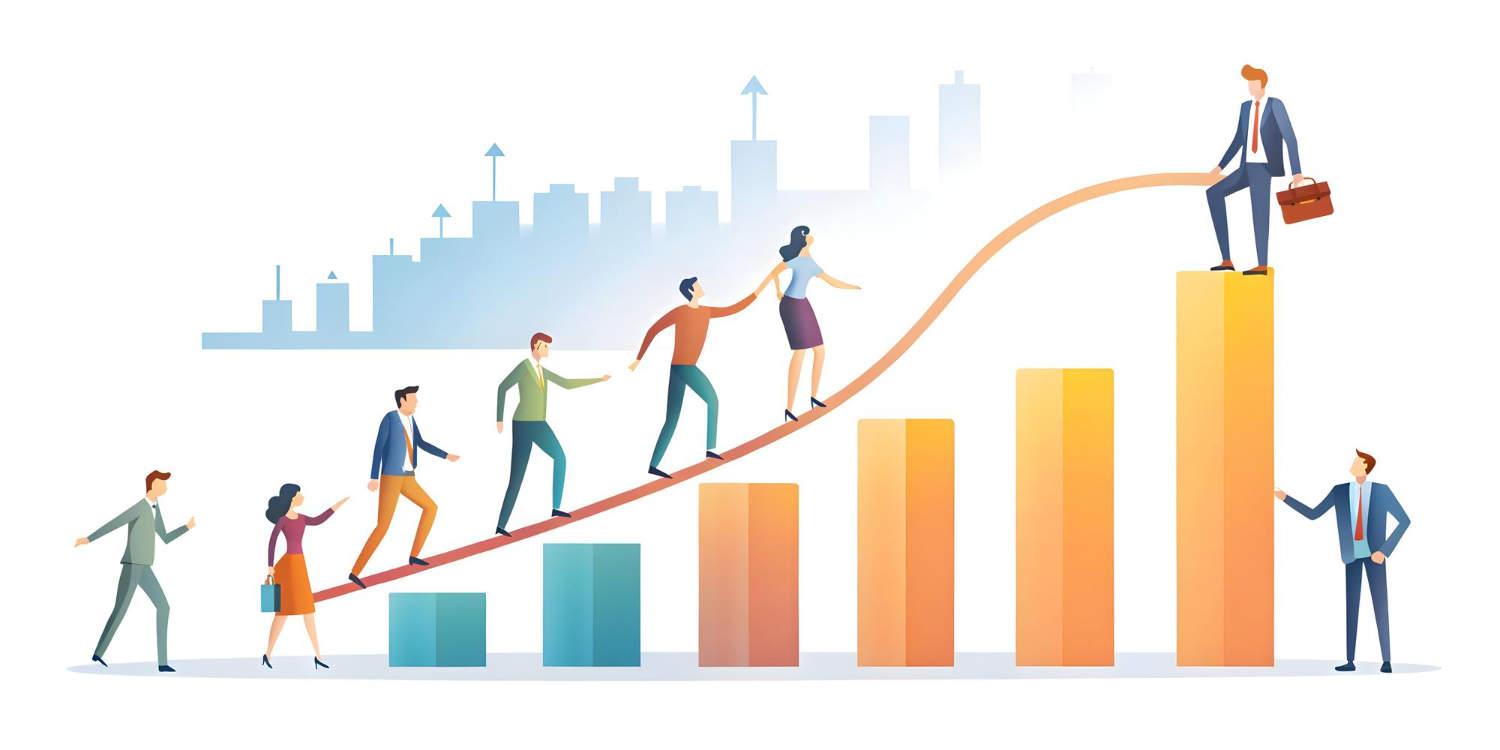
Personalized gamification works better than leaderboards for keeping people active and improving over time. Leaderboards push the top few forward and leave most people behind. Personalized systems match goals, pace, and rewards to each person, so more people stay active for longer and results improve across the whole team, not just at the top.
The simple answer is that most gamification systems are built around rewards rather than the work itself. Points and badges get tied to how much someone does rather than how well they do it, and people quickly learn to chase the reward rather than improve their actual results.
The second problem is that these systems treat every person the same. A system built for no one in particular ends up serving no one well. People have different jobs, different skill levels, and different reasons to try. A single set of tasks given to an entire team stops feeling useful to most people within a few weeks.
The result is a pattern most teams will know. People sign up, take part for a short while, and then quietly stop. A system built on surface-level rewards was never going to hold their interest for long.
Leaderboards are, by design, built to reward the people who are already doing well. The top ten percent of a team will find them useful because they are in a position to win. For everyone else, the leaderboard is a regular reminder of where they sit compared to stronger colleagues. That is not a reason to try harder. For most people, it is a reason to stop trying at all.
A study published in the Journal of Applied Psychology found that public ranking systems can reduce the drive to try among lower-ranked people, as the gap between them and the top begins to feel too wide to close. The people lower down do not push harder. They pull back from the system and stop taking part.
There is also a real difference between pressure and the drive to improve. Pressure is the feeling of being judged against others. The drive to improve is the inner push to do better because progress feels real and worth the effort. Leaderboards tend to create the first and wear down the second over time.
The last issue is that leaderboards invite shortcuts. When rank is the main measure, people find the fastest way to earn points rather than the best way to do their job. The leaderboard starts to measure clever shortcuts rather than real results, and the data it gives managers loses its worth.
Personalized gamification is a system that shapes tasks, goals, rewards, and feedback around each person rather than giving everyone the same setup. It takes into account a person's job, skill level, pace, and what drives them, and adjusts the experience to match.
The difference from standard gamification is plain. Standard gamification gives the same rules and rewards to every user. Personalized gamification starts with the person and builds from there. The goals a person sees, the tasks they are given, and the credit they earn are all shaped by who they are and how they work.
In practice, a new team member gets simpler tasks built around basic habits, while a more seasoned person gets harder tasks tied to bigger goals. A person driven by learning gets different rewards than one driven by peer credit. The tools are the same. The way each person feels the system is not.
The reason this works is grounded in Self-Determination Theory, a well-known framework in the field of human motivation developed by psychologists Edward Deci and Richard Ryan. The theory holds that people are most driven when three basic needs are met: feeling capable, feeling free to act, and feeling connected to others. Leaderboards, in most cases, address only the third and do so in a way that leaves the majority feeling less capable rather than more so.
Personalized gamification, on the other hand, is built to meet all three. Tasks are set at a level where each person feels capable of completing them. Progress is self-directed rather than dictated by rank. And the social layer, whether through team challenges or shared milestones, creates connection without the pressure of public comparison.
The difference between a system built on progress and one built on rank also carries real weight in practice. A rank-based system ties a person's sense of achievement to how they sit against others. A progress-based system ties achievement to how much a person has grown compared to where they started. This works for every member of the team, no matter their starting point.
Personalized systems also adjust to skill level and pace. A system that gives the same tasks to a new hire and a senior person is not helping either of them. The new hire finds the tasks too hard and loses heart. The senior person finds them too easy and loses interest. A personalized system sets tasks based on where each person is right now, which keeps the system worth using for everyone.
A TalentLMS survey of nearly 900 employees found that 89 percent say gamification makes them feel more productive at work, and 83 percent report higher motivation when gamified training is used. Teams using role-based gamification in sales, customer support, and onboarding see steadier results over time compared to those using leaderboard-only setups, precisely because the system stays useful to each person rather than becoming irrelevant after the first few weeks.
The starting point is a clear picture of who the users are and what drives them. This means grouping people by job, level of experience, and what broadly pushes them to try, then using those groups to shape how the system works for each of them.
The actions the system rewards must match the results the team values. Tying points to how busy someone is rather than how well they are doing their job produces a system that measures activity rather than real output. Finding the specific actions that lead to the results you care about and building the reward setup around those actions is what makes the system produce real change.
Progress markers are more useful than point totals. A system that shows a person how far they have come and how far they have to go is more useful than one that simply adds up a number. Goals should also shift as a person grows. Goals that stay the same quickly become either too easy or too hard, and both outcomes reduce how long people stay active.
We at ZyloQuest built our platform around these ideas. Our no-code rule builder lets HR and operations teams set which actions earn points, build role-based tasks for sales, onboarding, and customer support teams, and change the setup as goals shift, all without needing a developer.
Leaderboards work best in small teams where the gap between people is narrow and competition feels fair. When everyone has a real shot at the top, the feel of the system changes in a useful way. Taking part by choice also matters. A leaderboard people join on their own terms produces a very different result from one they are required to be part of.
The best use of a leaderboard is as one part of a broader, more personal system rather than its main feature. Used this way, it gives people who enjoy competition an option to take part without shaping the whole experience for those who do not.
Personalized gamification works because it is built around the person rather than the average. Leaderboards have a place, but only as a supporting feature within a system built around progress, relevance, and feedback that means something to the person receiving it.
The teams that see lasting results are the ones that move away from rank as the main driver and toward systems that give every person a clear, personal, and reachable path forward.
If you would like to see how this works in practice, book a free demo with ZyloQuest today.
Personalized gamification works better for keeping people active over time. Leaderboards push a small group of top performers and tend to push most others away. Personalized systems keep more people engaged by matching goals and rewards to each person rather than giving one setup to everyone.
Most systems fail because they reward activity rather than meaningful work and give the same setup to everyone regardless of job or skill level. This produces a short rise in interest that fades once the novelty is gone. Lasting interest requires the system to stay useful and adapt over time.
Standard gamification gives the same rules, tasks, and rewards to every user. Personalized gamification shapes the setup around each person based on their job, skill level, pace, and what drives them. The tools are the same but the experience each person has is built around who they are and how they work.
Leaderboards work best in small teams where competition feels fair and taking part is by choice. They are most useful as a supporting feature within a broader personal system rather than the main driver. In larger teams with wide gaps in results, leaderboards tend to put most people off and should be used with care.
It holds interest because the setup grows with the person. Goals get harder as skills grow, tasks adjust to current ability, and credit stays relevant to each person's drive. The system does not go stale because it is not fixed, and that ongoing usefulness is what keeps people active over time.
Yes, when it is built around the person rather than the rank. According to Self-Determination Theory, people are most driven when they feel capable, free to act, and connected to others. Personalized gamification is built to meet all three. Leaderboards, in most cases, address only one and do so in a way that leaves the majority feeling less capable rather than more.
For most employees, yes. Research points to the finding that public ranking systems can reduce the drive to try among lower-ranked people, as the gap between them and the top begins to feel too wide to close. Leaderboards tend to motivate the top ten percent and discourage the rest.