How Workplace Gamification Prevents Fake Productivity
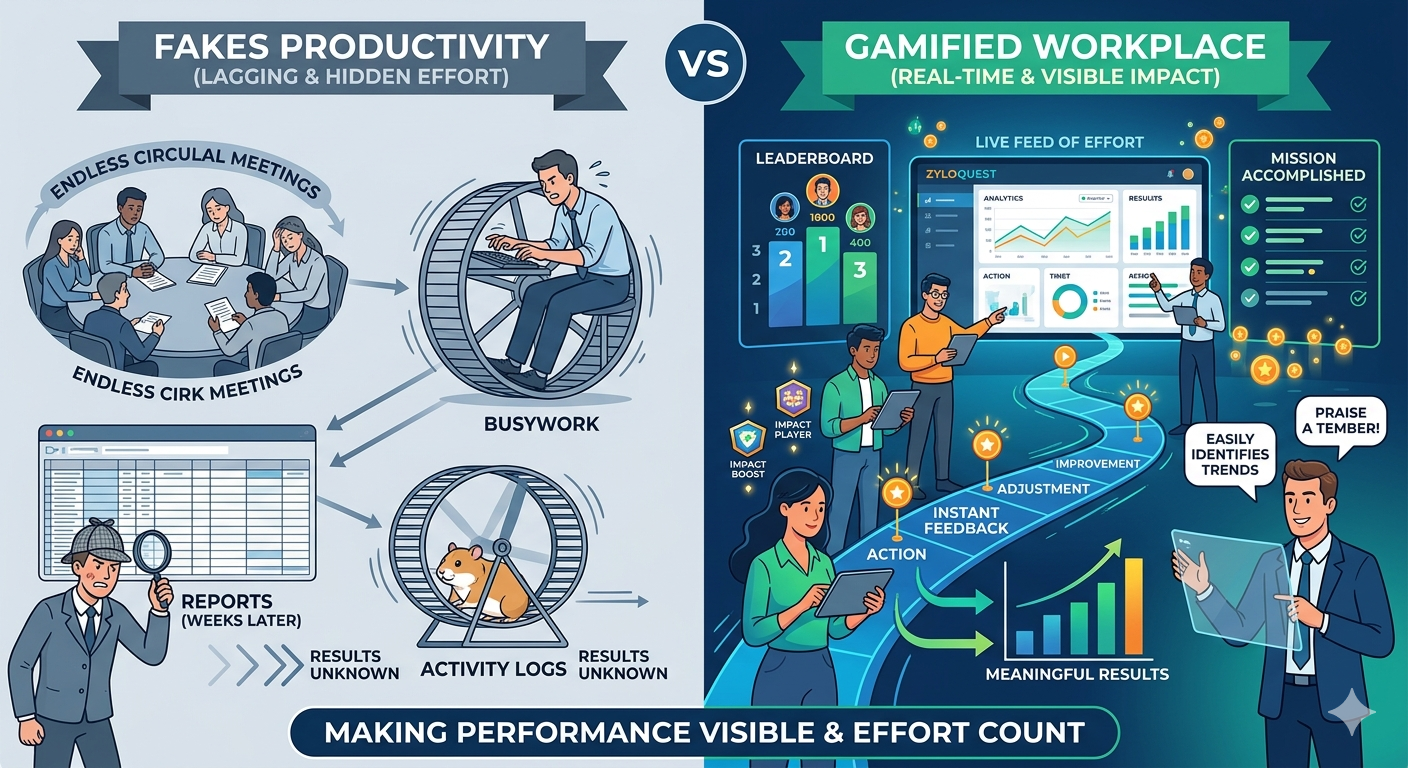
Fake productivity is all the effort that looks like progress but doesn’t actually deliver results.
You see it all the time:
Most of the time, people aren’t trying to pull a fast one. The system rewards staying busy more than being effective, so that’s where people go.
If performance is tracked by vague numbers or only at review time, employees chase whatever looks good on paper. Eventually, there’s a real gap between effort and meaningful impact.
It all starts with how we measure work.
Traditional tracking is about:
These answer, “What happened?” not “What’s happening right now?”
By the time you catch on, people have already spent weeks spinning their wheels. You only see the problem after the damage is done.
This creates two big headaches:
Gamification tweaks performance tracking in a big way.
Forget waiting for the end-of-quarter scorecard. It captures actions as they happen. Every useful move is logged instantly.
The focus shifts:
Actions that drive outcomes are rewarded. Larger goals break down into smaller missions. Leaderboards let everyone see progress in real time.
It’s not just more data. It is the right data, right when you need it.
Managers spot dips and patterns early, while there’s still time to fix them.
Fake productivity loves confusion.
If no one really knows what matters, it’s easier to look productive without actually delivering. Gamification cuts through that by spelling out what counts and tracking it.
Three big shifts make this happen:
Fake productivity falls apart when:
Absolutely, as long as it focuses on the right behaviors.
Gamification doesn’t just record what people do. It shapes what they do.
Old-fashioned setups make people fly blind. Progress is murky. Rewards come late. This leads to people checking out or working hard on the wrong stuff.
Gamification closes that loop:
Deloitte found that companies using real-time feedback have tighter teamwork and more engagement. That’s how gamification works on the ground. When people know what matters and can see their progress, they focus on work that actually gets results.
The first thing you notice? Clarity.
Employees finally know:
This leads to more focused effort. Work is shaped around the actions that count, not just whatever gets thrown at people.
Recognition matters more. When achievements get noticed right away, people connect their effort to results. If you wait months, recognition doesn’t hit the same way.
Managers can actually trust the performance data. No more guessing. Solid data means decisions are based on what’s actually happening.
Over time, you get:
Gamification only works if you build it around meaningful behaviors
Step one: figure out which actions drive real results. Distinguish what’s busywork and what actually matters.
Once you’ve nailed down the good stuff:
Customize for each team. One size doesn’t fit all.
Watch closely right after launch. You’ll see within weeks if the system steers people the right way or needs a fix.
Gamification isn’t just about making things competitive. It’s about making performance visible so people can act on it.
ZyloQuest puts all this into practice. The platform builds performance tracking right into daily work. Not just another set of reports to fill out later.
It lets teams set rules based on real behaviors, without making things complicated. Points and leaderboards aren’t tacked on. They connect directly to meaningful actions.
Role-based personalization matters, too. When the system matches people’s actual jobs, they stick with it. Relevance keeps engagement strong.
Fake productivity sticks around when effort is hidden, feedback is slow, and performance gets measured too late. Gamification changes that. It makes effort visible right now, pushing people to actually get things done.
Employees know what matters. Managers get real-time insights. Performance becomes something you guide, not something you judge after the fact.
The best organizations use performance data as a live signal, not just a historical record. Once you do that, fake productivity has nowhere left to hide.
Gamification rewards actions that matter. Not just activity. When people see what counts and track their progress instantly, they focus on work that brings real results.
It usually happens when nobody’s clear on goals, feedback comes too late, and systems reward looking busy instead of delivering impact. People respond to what’s tracked, even if it’s not meaningful.
It works best where you can map performance to specific behaviors. With the right setup, it’s effective for sales, operations, HR, and even knowledge-based roles.
Definitely. When feedback is fast and progress is visible, people stay invested. They can see exactly how their effort drives results.